


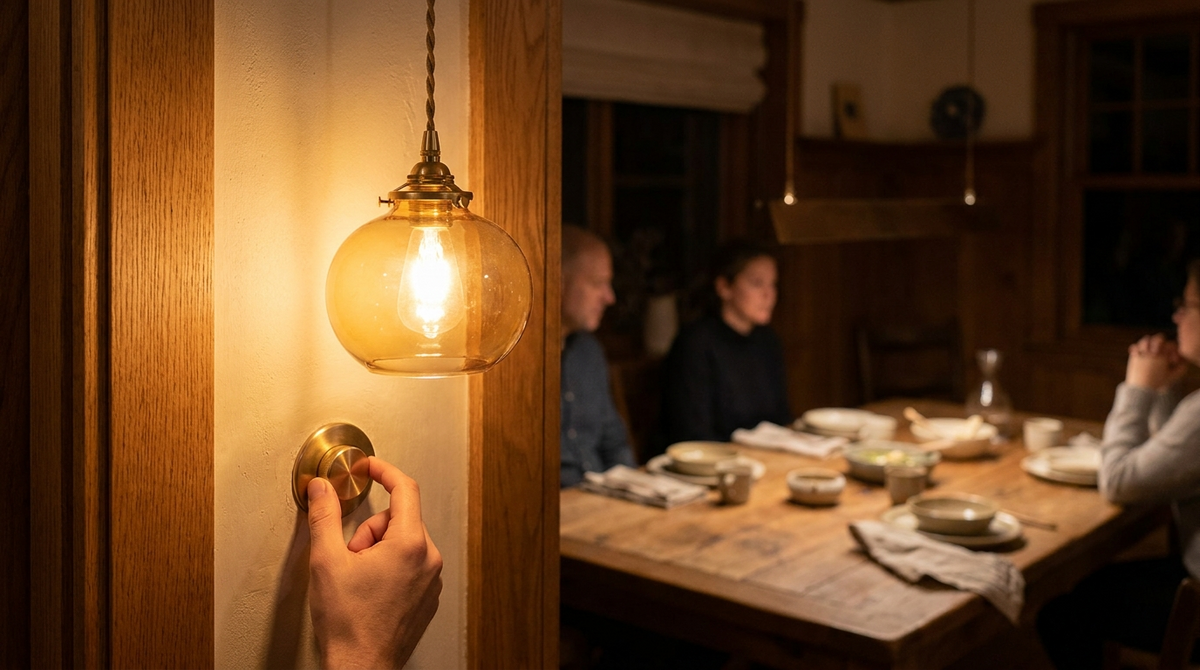
A pendant light often serves as the main light source in a room, so its dimmability directly affects how you can use the space in different situations – bright task lighting for meal preparation, dimmed ambient lighting for dinner with guests, or soft evening illumination when you're winding down. In this guide, we'll walk through everything you need to check when purchasing a dimmable pendant light to ensure it works perfectly in your home.
Three essential checks before purchasing
1. Fixture compatibility
Not all pendant lights are manufactured with dimming capability – always check the product specifications for the mention "dimmable" or a dimmer icon. This is particularly important in European markets where lighting standards vary. Some fixtures are designed exclusively for non-dimmable bulbs, and forcing a dimmer into the circuit can damage both the fixture and your electrical installation. If the pendant light only accepts a specific bulb type (such as integrated LED modules or a particular socket type like GU10), that bulb must also be dimmable. Many modern designer pendant lights come with integrated LED modules – in these cases, the entire fixture must be specified as dimmable from the manufacturer.
2. LED bulb dimmability
This is where many homeowners run into trouble: an LED bulb is not automatically dimmable. Always verify this separately on the packaging or in the product specifications before purchasing. Non-dimmable LED bulbs used with a dimmer switch will often flicker noticeably, produce an annoying buzzing or humming sound, or fail prematurely – sometimes within weeks rather than the expected years of service. When shopping for replacement bulbs, look for clear labelling that states "dimmable" or shows a dimmer icon. European manufacturers typically mark this clearly on the packaging. Keep in mind that dimmable LED bulbs are generally slightly more expensive than their non-dimmable counterparts, but the investment is worthwhile for the flexibility and ambiance control they provide. If you're planning to integrate smart home control, consider a smart LED controller like the MiBoxer SM2 Matter LED controller which allows for wireless dimming control.
3. Dimmer switch type
The traditional TRIAC phase-cut dimmer (also called leading-edge dimmer) is compatible with most dimmable LED bulbs available in European markets, but older dimmer switches designed for incandescent bulbs don't always perform well with LED loads. LEDs draw far less current than traditional bulbs, which can confuse older dimmers and cause issues. If you notice flickering at low dim levels, or if the bulb won't dim below 40-50% brightness, the issue is usually an incompatible dimmer rather than a faulty bulb. In these cases, upgrading to a modern LED-compatible dimmer (look for ones marked "LED" or with a minimum load rating as low as 5W) will resolve the problem. Some European electricians recommend trailing-edge (reverse phase) dimmers for LED installations, as these tend to offer smoother dimming curves and eliminate the low-level buzz that can occur with certain LED drivers. For advanced lighting setups, you might also consider a TRIAC and transistor dimmable LED transformer which provides professional-grade dimming performance.
Benefits of a dimmable pendant light
- One fixture serves multiple purposes – bright task lighting for cooking, reading, or detailed work, and soft ambient lighting for dining, entertaining, or relaxing in the evening. This eliminates the need for separate mood lighting fixtures, saving both money and ceiling space.
- Extends LED bulb lifespan significantly because continuous operation at full power generates more heat and stress on the LED driver. Dimming to 70-80% brightness can potentially double the service life of quality LED bulbs.
- Enables lighting adjustment according to time of day, which supports your natural circadian rhythm – brighter, cooler light in the morning helps you wake up and stay alert, while warmer, dimmed light in the evening signals your body to prepare for rest.
- Reduces energy consumption: dimming an LED bulb to 50% brightness typically reduces power consumption by approximately 40-50%, leading to measurable savings on your electricity bill over time.
- Creates versatility for different activities in multi-purpose rooms – many European homes feature open-plan kitchen-dining-living areas where a single pendant over the dining table needs to accommodate everything from children's homework to romantic dinners.
When dimmability isn't necessary
Not every room benefits from dimmable lighting. Hallways, stairwells, utility rooms, or bathroom main lighting typically require consistent illumination levels – in these spaces, the lighting need is always the same, and you simply want reliable, bright light when you flip the switch. In such cases, a simpler and more affordable non-dimmable solution is perfectly adequate and actually preferable, as it eliminates potential compatibility issues. Storage areas, garages, and outdoor security lighting similarly rarely require dimming functionality. Investing in dimmable fixtures for these areas offers no practical benefit and only adds unnecessary cost to your lighting project.
Hanging height and size principles remain unchanged
Dimmability doesn't alter the fundamental sizing and positioning principles for pendant lights. The fixture still needs to be the correct size for your table or room, and hung at the appropriate height to provide effective illumination without causing glare. As a general rule, pendant lights over dining tables should hang 70-80 cm above the table surface, while the diameter should be roughly one-third to one-half the width of the table for balanced proportions. For more detailed guidance on these fundamentals, see our comprehensive guide on pendant light sizing and positioning before making your purchase decision.
Combining with other lighting layers
A dimmable pendant light works exceptionally well in combination with indirect lighting – use the main pendant at full brightness when you need task lighting for cooking, working, or reading, while indirect lighting (such as LED strip lighting behind cornices, under cabinets, or in alcoves) creates ambient background illumination in the evening. This layered approach to lighting design is central to contemporary European interior design, allowing you to craft different moods and atmospheres in the same space throughout the day. Many homeowners in Scandinavia and Central Europe use this combination to combat the darker winter months, maintaining bright functional lighting when needed while creating cosy, warm evening environments that promote relaxation. In open-plan living spaces, this combination is particularly effective – the dimmable pendant provides focused light over the dining area, while indirect perimeter lighting defines the space and provides general illumination without harsh shadows.
Browse our complete LED ceiling lights collection and use the filter to view dimmable models that suit your space and style.


0 comments