


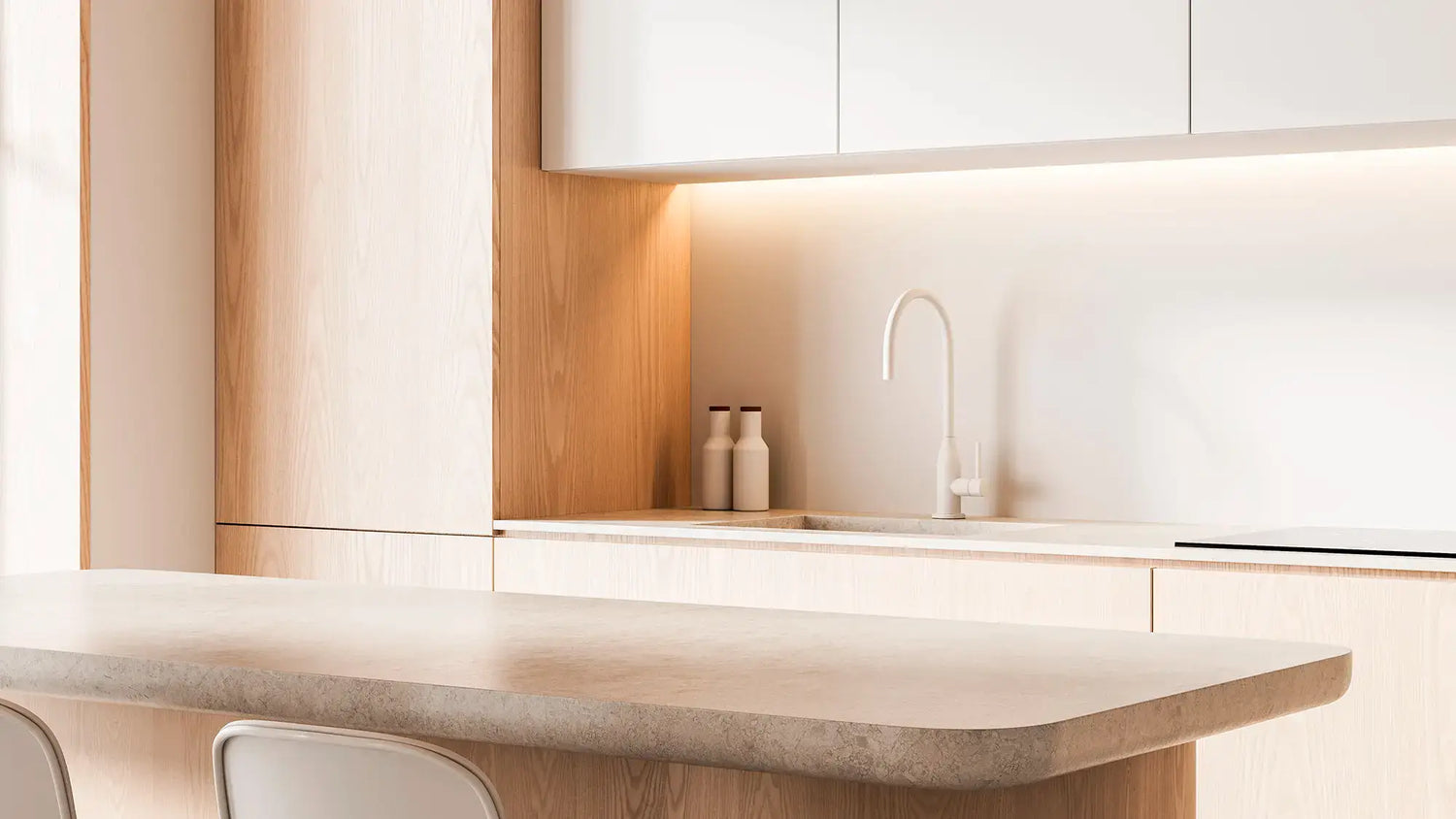

Why Choose Dimmable LED Lighting for Your Kitchen?
The modern European kitchen is no longer just a place for cooking – it serves as the social heart of the home, where we work remotely, spend quality time with family, host dinner parties, and even help children with homework. For this reason, fixed lighting limited to a single brightness level is often inadequate for the diverse activities that take place throughout the day. Dimmable kitchen LED lighting offers the flexibility that contemporary lifestyles demand, particularly in open-plan living spaces that have become increasingly popular across European homes.
The greatest benefit of dimming capability is versatility. When you need precision for chopping vegetables, reading recipes, or checking the doneness of meat, you can adjust lights to full power, providing the necessary task lighting for safe and efficient food preparation. As evening approaches and it's time to relax with a glass of wine or enjoy a leisurely family meal, reducing the light output instantly transforms the space into a calm, welcoming retreat. This adaptability is particularly valuable during the darker winter months in Northern Europe, when the contrast between bright work lighting and cosy evening ambience becomes even more pronounced.
Furthermore, LED technology is exceptionally energy-efficient – a critical consideration given current European energy standards and the continent's commitment to sustainability. When lights are dimmed, energy consumption decreases proportionally, and the lifespan of your fixtures extends significantly since they're not constantly operating at maximum load. Many European households have reported energy savings of 40-60% when switching from traditional halogen kitchen lighting to dimmable LED systems, with the added benefit of fixtures lasting 25,000-50,000 hours compared to mere 2,000 hours for older technologies.
In quality installations, such as the solutions we offer, light quality also stands out. A high Colour Rendering Index (CRI > 90) ensures that ingredients and kitchen materials appear natural and true-to-life, even in dimmed conditions. This is particularly important when preparing visually appealing dishes or when your kitchen features premium materials like natural stone worktops or wooden cabinetry that deserve to be showcased properly. Dimming should never cause flickering or colour shifts, which is why we exclusively use professional-grade drivers and controllers that guarantee smooth, eye-friendly performance. Cheaper dimming systems often produce visible flicker that can cause eye strain and headaches, especially during extended cooking sessions.
From Task Lighting to Ambient Atmosphere with a Single Adjustment
Working in the kitchen requires shadow-free, bright illumination. Particularly, kitchen LED lighting installed above worktops is a critical factor for ergonomics and safety. With a dimmable system, the same light source that functions as effective task lighting transforms at the touch of a button into decorative ambient lighting that sets the perfect mood for evening socialising.
Many homeowners across Europe now choose powerful LED strips for their kitchens, such as those rated at 15W/m. These produce up to 1400 lumens per metre – more than sufficient even for the most demanding kitchen tasks. According to European lighting standards (EN 12464-1), kitchen worktops require 500 lux for optimal task performance, which this output easily achieves. Without dimming capability, such light output could be uncomfortably glaring during the evening when you simply want to fetch a glass of water or enjoy a quiet moment with a late-night snack. With a dimmer, the light output can be reduced to as low as 10%, making it function excellently as a night light or indirect decorative accent.
The smoothness of dimming is paramount. Quality 24V systems enable stepless adjustment without jumps between brightness levels. This creates a luxurious feel as light glides seamlessly from bright to dim. It's also worth remembering that dimming affects the perceived depth and dimension of your space; by highlighting certain areas of the kitchen whilst leaving others in subtle shadow, you can create dynamic and visually interesting atmospheres. For instance, during a dinner party, you might fully illuminate the dining area whilst keeping under-cabinet lighting at 30% to provide gentle background illumination without drawing attention away from the table setting.
Another practical consideration for European homes: dimmable systems work brilliantly with smart home integration. Many of our customers in countries like Germany, the Netherlands, and Scandinavia integrate their kitchen LED lighting with systems compatible with European smart home standards, allowing voice control, automated schedules aligned with sunrise and sunset times, and even presence detection that adjusts lighting when you enter the kitchen for those early morning coffee moments.
Tips for Choosing the Right Colour Temperature
Colour temperature, expressed in Kelvin (K), defines how warm or cool the light feels. Kitchen LED lighting is typically selected in either pure white (4000K) or warm white (3000K). The choice largely depends on your kitchen's existing colour palette and the desired atmosphere, though increasingly, European homeowners are discovering the benefits of tunable white technology.
- 4000K (Neutral White): Excellent for modern, white, or grey kitchens prevalent in contemporary European design. It's crisp, increases alertness, and is optimal for detailed work as it renders colours as neutrally as possible. This temperature is particularly popular in Scandinavian-style kitchens and minimalist German designs, where clean lines and bright, airy spaces are prioritised. Professional chefs often prefer this temperature as it closely mimics natural daylight, making it easier to judge the colour and freshness of ingredients.
- 3000K (Warm White): Creates a homely and inviting atmosphere. Particularly suitable for wooden surfaces and more traditional or country-style interiors that remain popular across Southern Europe and the UK. It's gentler on the eyes during evening hours and complements warm-toned materials like brass fixtures, terracotta tiles, or natural oak cabinetry. Many families find that 3000K makes the kitchen feel more welcoming when gathering for breakfast or relaxed weekend cooking sessions.
- CCT-Tunable (2700K–6500K): If you can't decide, a CCT strip is the ultimate solution. It allows you to adjust colour temperature according to time of day or activity: cool, energising white during daytime meal preparation, and very warm, candlelight-like glow in the evening. This flexibility mirrors natural circadian rhythms and can contribute to better sleep patterns – particularly beneficial during the prolonged darkness of European winters. Some advanced systems even sync with astronomical clocks to automatically shift colour temperature throughout the day.
When planning your kitchen LED lighting, also consider surface reflectivity. Dark and matte surfaces absorb more light, requiring more powerful fixtures to achieve adequate illumination levels. Conversely, light and glossy surfaces reflect light, which can cause glare if LED points are visible – a common issue in contemporary high-gloss kitchen designs popular in markets like Italy and Spain. This is why we always recommend COB (Chip-on-Board) type LED strips, which produce completely uniform light without visible individual LED spots, eliminating the dotted reflection effect that can appear on polished worktops or glass splashbacks.
For kitchens with feature elements like open shelving displaying colourful ceramics or artwork, consider installing separate LED strips with different colour temperatures: 4000K for work areas and 3000K for display zones. This layered approach, common in professionally designed European kitchens, creates visual interest whilst maintaining functionality where it's needed most.
LED Strips and Spotlights: Versatile Light Sources for Your Kitchen
Effective and stylish kitchen LED lighting typically results from combining different light sources. LED strips are the most popular choice for under-cabinet illumination and worktop lighting, whilst spotlights (downlights) work brilliantly as general lighting or for highlighting specific features such as breakfast bars, kitchen islands, or glass-fronted display cabinets.
LED Strips and Profiles:
LED strips installed under wall cabinets should always be placed in aluminium profiles. A profile, such as PINTA10.v2 or SUORA12, not only protects the strip from dirt, cooking splashes, and moisture but also serves as a heat sink, which extends LED lifespan significantly. In a typical European kitchen where cooking happens daily, this protection against grease and steam is essential for maintaining both performance and appearance over time.
The profile's cover (diffuser) further smooths the light output, eliminating any hotspots and creating the premium, uniform illumination expected in quality European kitchen design. Frosted or opal diffusers are particularly effective at hiding individual LEDs whilst maintaining high light output. Example of a recommended configuration for European kitchens:
- LED Strip: 15W/m COB LED strip with CRI>90 for accurate colour rendering of fresh ingredients
- Profile: Surface-mounted aluminium profile with frosted cover for even light distribution
- Power: 24V system for enhanced safety in potentially wet environments (compliant with European Low Voltage Directive 2014/35/EU)
- Control: Quality dimmer compatible with European 230V mains, offering smooth 0-100% dimming without flicker
For larger kitchens or open-plan kitchen-dining areas common in modern European apartments and homes, consider installing LED strips in multiple zones with separate dimming control. This allows you to illuminate only the prep area during cooking whilst keeping dining or living zones softly lit, creating distinct atmospheres within the same space and maximising energy efficiency.
Recessed and Surface-Mounted Spotlights:
Ceiling-mounted spotlights provide general ambient lighting and work particularly well in kitchens with kitchen islands or peninsulas that don't benefit from wall-mounted cabinets. In renovation projects where ceiling access is limited – common in period European buildings with solid concrete ceilings – surface-mounted spotlights offer an excellent alternative without the need for extensive structural work.
When positioning spotlights, follow the European recommendation of placing them 60-90cm from wall cabinets to avoid casting shadows on worktops. For a standard 3-metre-long kitchen, 3-4 adjustable spotlights typically provide adequate coverage. Opt for fixtures with good beam angle control – narrow beams (25-35°) for accent lighting on specific features, wider beams (60-90°) for general illumination. Many contemporary European kitchen designs incorporate track lighting systems that offer ultimate flexibility, allowing you to reposition lights as your needs change or when you update your kitchen layout.
Remember that all kitchen lighting, particularly near sinks and hobs, should meet appropriate IP (Ingress Protection) ratings. While IP20 suffices for most under-cabinet applications, areas directly above sinks benefit from IP44-rated fixtures that resist water splashes – a requirement often specified in European building regulations for wet zones.


0 comments