


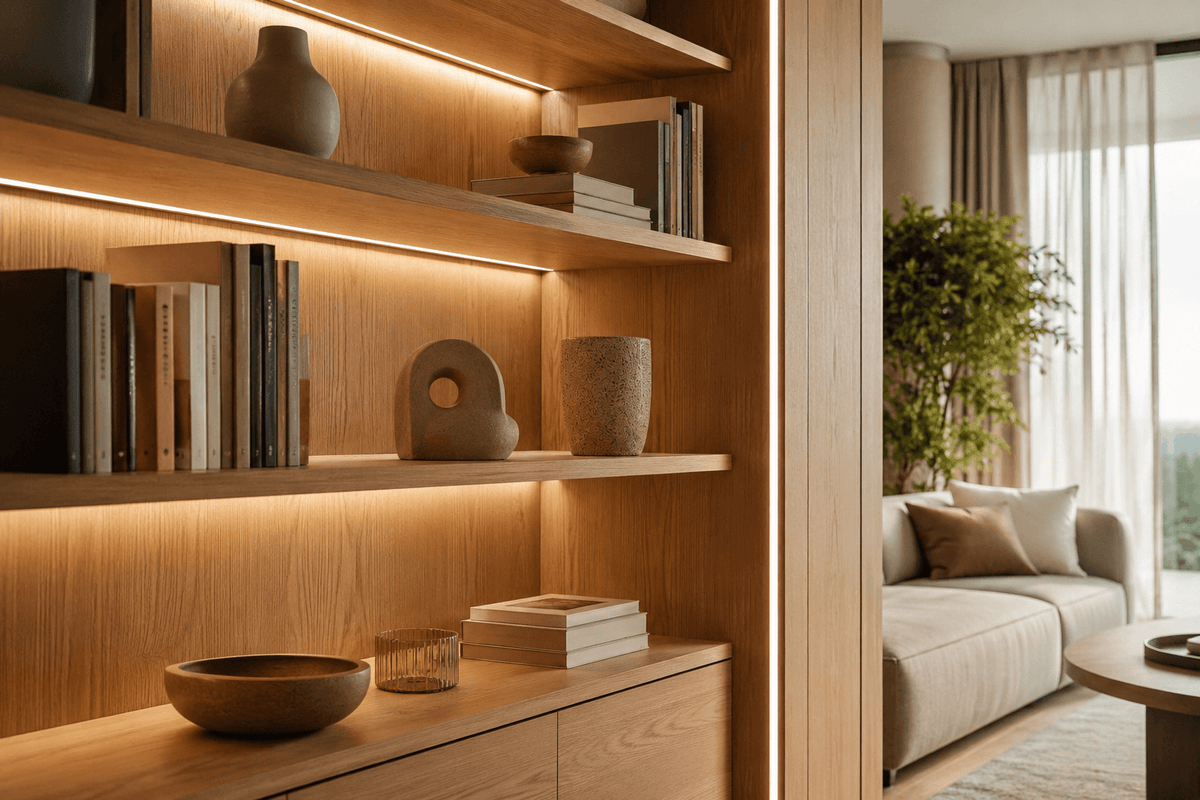
Why LED Profiles Are Essential for Professional LED Strip Installations
LED profiles are one of the most important components in a successful LED strip installation. They finish the lighting appearance, protect the LED strip and help create a neat, durable and professional result. A well-chosen LED profile makes the difference between lighting that looks carefully planned and something that appears hastily put together.
Many people choose the LED strip first and only think about the profile later. A better approach is to plan the LED strip, LED profile and power supply as one complete system. The profile's shape, height, diffuser and mounting method all affect how the light looks in practice and how easy the installation is to execute neatly.
If you're already planning a lighting project, you can explore Valotehdas LED profiles and LED lists, LED strips and LED power supplies directly.
Why Choose LED Profiles for Your LED Strips
The primary function of an LED profile is to make LED strip installation neat and long-lasting. Without a profile, the LED strip easily remains visible, collects dust and can look unfinished. The profile conceals the strip's structure and makes the light more controlled.
An aluminium LED profile also supports the LED strip and helps transfer heat away from it. LED strips don't generally heat up like old light sources, but heat still affects LED lifespan. When an LED strip is installed in a quality aluminium profile, heat can distribute more evenly.
Another significant benefit is the light's appearance. The profile's opal cover, or diffuser, softens the light and reduces the visibility of individual LED dots. The denser the LED strip and the more suitable the profile, the more uniform the light line achieved. In kitchen worktop lighting, for example, this directly affects usability, as glare is reduced and light distributes better across the work surface.
LED profiles are particularly useful in these applications:
- kitchen backsplash and worktop lighting
- cabinet, shelf and display case lighting
- indirect lighting for ceilings, walls or furniture
- stair and hallway accent lighting
- home ambient and decorative lighting
- LED light strips for finished installations
LED Profile Types and Material Options
Choosing an LED profile should be based on the application. Not all profiles suit every installation, and the result depends greatly on whether you want the light visible, hidden, in a corner or recessed into a surface.
Surface-Mounted LED Profiles
Surface-mounted LED profiles are the most common and easiest option. They attach directly to a flat surface, such as the underside of a cabinet, shelf, wall or ceiling. This is a good choice when the profile cannot or need not be recessed into the structure.
Surface-mounted profiles work well for kitchen worktop lighting, utility rooms, workstations and under cabinets. When chosen with a slim shape and opal cover, the result is unobtrusive and stylish.
Recessed LED Profiles
Recessed LED profiles provide an extremely finished result. The profile is recessed into furniture, a panel or other structure so that only the light-softening cover remains visible. This solution is particularly suited to bespoke furniture, shelves and applications where the most discreet installation is desired.
In recessed installations, it's important to consider the profile dimensions during the planning stage. The mounting recess must be made to the correct size so the profile fits neatly without being too loose or too tight.
Corner Profiles
Corner-mounted LED profiles are a good choice when you want to direct light at an angle. A typical application is under kitchen wall cabinets, where light is directed towards the worktop. Corner profiles can help reduce glare and improve light direction compared to profiles pointing straight down.
Corner profiles also suit display cases, shelves and other applications where you want to control the light's angle of incidence more precisely.
Kitchen LED Profiles
Kitchens are one of the most common applications for LED profiles. Worktop lighting mustn't cause glare, but needs to be powerful enough for cooking and cleaning. Therefore, it's worth choosing a profile that protects the LED strip and directs light evenly onto the worktop.
For kitchen applications, you can look directly at kitchen LED profile options. Often an effective solution is a surface-mounted or corner-mounted aluminium profile with an opal cover.
Deep LED Profiles for More Uniform Light Lines
If the goal is the most uniform light line possible, the profile's depth matters. A deeper profile provides more distance between the LED strip and diffuser, making individual LED dots less visible. This is especially important when using traditional LED strips where the LEDs are clearly separated from each other.
With COB LED strips, the light line is already very uniform, but even with these, a profile improves installation durability and finish. A COB strip combined with a suitable opal-covered profile is a good solution for applications requiring soft and uniform light.
Special Profiles for More Demanding Applications
For some applications, standard surface or recessed profiles aren't the best solution. For example, stairs, floor edges, tiled areas, indirect lighting or slatted ceilings may require more specialised profiles. For these applications, look at special profiles for LED strips.
The advantage of a special profile is that it's designed for a specific mounting method. This usually results in a neater finish and easier installation than adapting a standard profile.
Aluminium or Plastic Profile?
For most LED strip installations, aluminium profiles are the recommended choice. Aluminium is sturdy, neat and helps with heat management. Plastic profiles may suit lightweight decorative installations, but for a durable and quality result, aluminium profiles are usually the better option.
When choosing a profile, check at least these points:
- does your chosen LED strip fit inside the profile
- is the profile height sufficient for the desired light uniformity
- does the mounting method suit the application
- do you need an opal cover, clear cover or other diffuser
- is the profile length suitable or easily cut to size
How to Install LED Profiles Correctly – Tips and Best Practices
Installing LED profiles isn't difficult, but care greatly affects the result. Before installation, measure the location accurately and plan where cables will run to the power supply. When wiring and profile placement are thought through in advance, the result will be neater.

The typical installation sequence is as follows:
- Measure the installation location and determine the required profile length.
- Cut the profile to the correct length with a suitable tool.
- Clean the mounting surface of dust and grease.
- Secure the profile with screws, clips or another suitable method.
- Install the LED strip inside the profile in a straight line.
- Connect the cables and ensure the power supply is correctly sized.
- Snap the diffuser into place and test the lighting.
The power supply used with LED strips must be correctly sized. An undersized power supply can cause problems, and an oversized system may be unnecessarily expensive. Find suitable options in Valotehdas LED power supplies.
If installation is in a damp space such as a bathroom, consider the room's requirements and product IP ratings. Electrical installations must always comply with current regulations. Fixed electrical installations should be carried out by qualified electricians.
What to Avoid When Installing LED Profiles
One of the most common mistakes is installing LED strips directly onto wood, furniture or painted surfaces without a profile. This may look workable initially, but over time the strip can detach, become dirty or look untidy. A profile makes the installation more robust and protects the strip better.
Another mistake is choosing too shallow a profile when aiming for a dotless light line. If individual light points on the LED strip remain visible and this is bothersome, choose either a deeper profile or a more uniformly lit COB LED strip. See suitable options in the LED strip range.
A third typical mistake relates to wiring. Cable placement should be planned before fixing the profile. Otherwise the result may look untidy, even if the light itself works well.
Avoid at least these mistakes:
- installing LED strips without a profile in a visible location
- choosing too shallow a profile when wanting a uniform light line
- selecting an incorrectly sized LED strip for the profile
- undersizing the power supply
- failing to plan the cable route
- installing the profile on a dirty or uneven surface
LED Profiles as Part of Complete LED Light Strips
LED profiles, LED strips and power supplies can be combined to create complete LED light strips for many home applications. This is a good solution when you want neat and finished lighting for kitchens, shelves, cabinets or indirect lighting, for example.
Valotehdas LED profiles and LED lists help you build a complete system according to your own measurements and needs. First choose a profile suitable for your application, then select a compatible LED strip, diffuser, end caps and correctly powered supply.
Frequently Asked Questions About LED Profiles
What are LED profiles and why should you use them?
LED profiles are mounting channels, usually made from aluminium, into which LED strips are installed. They allow LED strips to be secured neatly in place, make the light more controlled and the installation more durable. Profiles also protect the strip from dust, contact and mechanical stress.
What profile suits kitchen LED strips?
For kitchen worktop lighting, a surface-mounted or corner-mounted aluminium profile with an opal cover often works well. Corner profiles direct light well onto the worktop, whilst low surface-mounted profiles work as neat general solutions under cabinets. If you want the most uniform light, choose a sufficiently deep profile or a COB LED strip.
Can I install LED profiles myself or do I need a professional?
The mechanical fixing of the profile itself is often possible to do yourself in many applications, if you have the tools and understand the installation method. However, fixed electrical installations and mains voltage connections must be carried out by qualified electricians. If you're unsure, verify the installation method with a professional beforehand.
How do I choose the right length and shape for an LED profile?
Measure the installation location accurately and choose the profile shape according to the application. Surface-mounted profiles suit direct surface mounting, recessed profiles suit furniture for a finished result, and corner profiles are for directing light. Profiles can usually be cut to the appropriate length, but use a clean tool suitable for the material when cutting.
How do I maintain and keep LED profiles clean?
LED profiles are easy to maintain. Wipe the profile surface and diffuser with a soft, dry or lightly damp cloth. Avoid harsh cleaning agents that can scratch or dull the cover. In kitchens, profiles should be cleaned regularly of grease and dust so the light remains uniform.
Explore Valotehdas LED Profile Range
A correctly chosen LED profile makes LED strip installation neat, durable and pleasant to use. It improves the light's appearance, protects the LED strip and helps finish a lighting project professionally.
Explore Valotehdas's quality LED profiles and LED lists and find exactly the right solution to finish your lighting project. Complete the system with suitable LED strips and LED power supplies. Order easily from the webshop now!


0 comments