


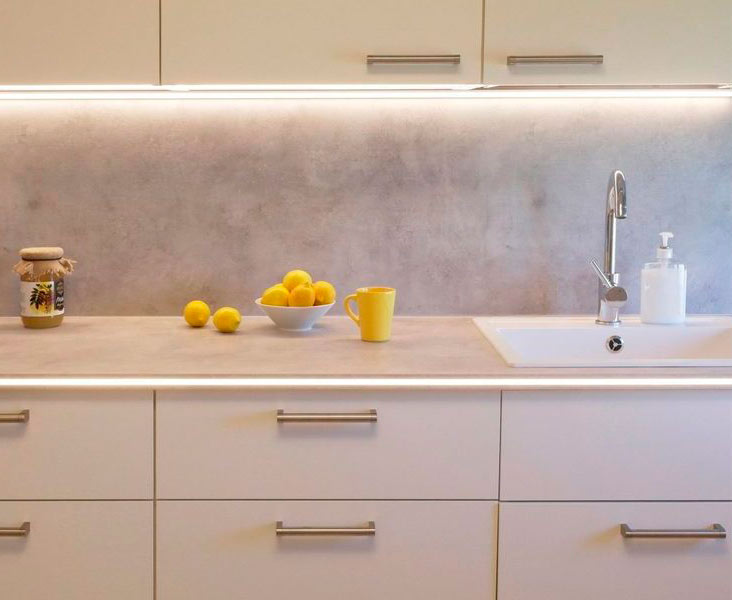
The kitchen is the centre of everyday life and cooking. The right kitchen lighting makes the space both practical and welcoming. In addition to the design and brightness of the fixtures, colour temperature plays a major role. It is measured in kelvins (K) and affects how colours, materials and food appear.
A good kitchen usually combines neutral light for worktops with warmer light for the dining area and general ambience. This creates a flexible space that works for cooking during the day and relaxing in the evening.
How colour temperature affects the dining area
Warm white light creates a relaxed atmosphere above the dining table and makes food and natural materials look inviting. Cool, bluish light can feel clinical, while very warm and dim light may reduce visibility. Choose LEDs with a CRI of 90 or higher for natural-looking colours.
How many kelvins should you use?
For kitchen worktops, 4000K neutral white is usually the most practical choice. For general lighting and dining areas, 2700–3000K warm white creates a comfortable atmosphere.
Combining smart control with warm light
CCT LED lighting lets you adjust the white tone from warm to neutral white. During the day, brighter 4000K light supports cooking and cleaning. In the evening, dimmed 2700K light creates a calmer setting for dining and socialising.


0 comments