


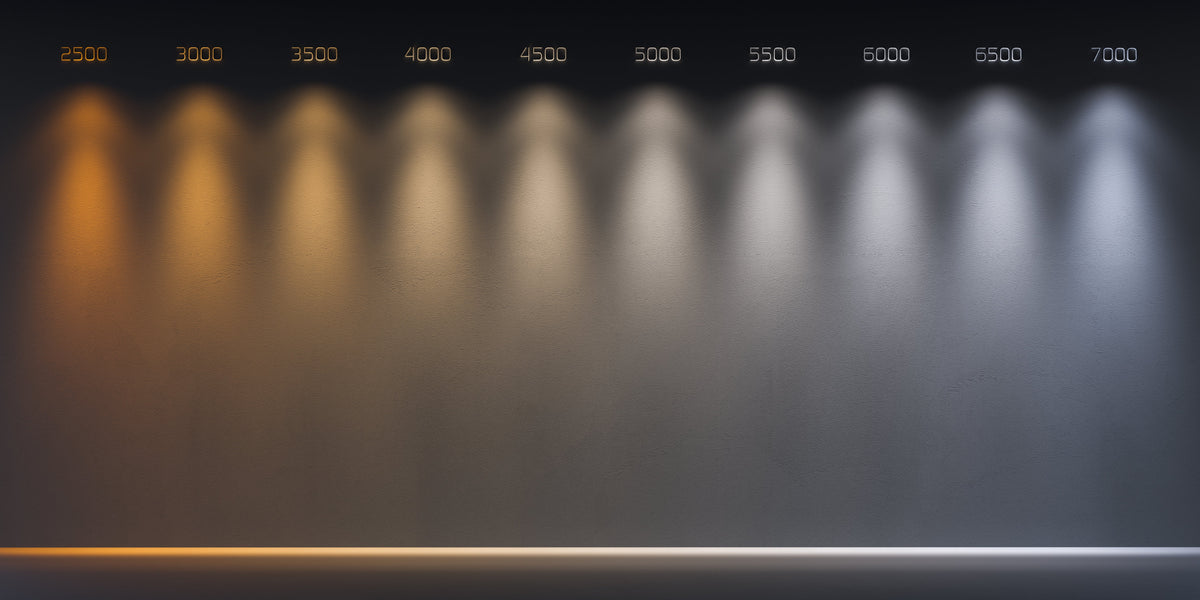
Lighting has a major effect on how a home feels. Colour temperature is measured in kelvins and determines whether light appears warm and inviting or cool and clinical. Choosing the right Kelvin values improves comfort and helps materials and colours look their best.
How colour temperature affects wellbeing
Bright bluish light supports alertness during the day, while warm light helps the body prepare for the evening. Warm white light between 2200K and 3000K is often a good choice for living spaces and evening lighting.
Which Kelvin value should you choose?
- 2200–2500K: candle-like accent light for bedrooms and evening ambience.
- 2700–3000K: warm white for living rooms and comfortable general lighting.
- 4000K: neutral white for kitchens, worktops and focused tasks.
Layered lighting works better than one bright ceiling fixture. Combine ambient, task and accent light, and control the layers separately with switches or dimmers.
Indirect LED lighting
An aluminium profile helps cool the LED strip and a diffuser creates a smooth, glare-free line of light. Hide the strip from direct view and avoid reflecting it straight onto highly glossy surfaces.
Adjustable colour temperature and smart control
CCT LED strips and luminaires allow the light to change from warm evening light to neutral daytime light. With a compatible controller, this can be automated according to the time of day.
When colour temperature, light layers and glare control are planned together, the result is a comfortable and functional home throughout the day.


0 comments